Table of Contents
- Georgia Home Selling
- Which Areas in Georgia Offer the Best Return on Investment and Are Easiest for Residential
- What Home Styles, Sizes, and Features Tend to Sell Fastest in the Georgia Market?
- What Should Home Sellers Know About Zoning Laws, Permits, and Regulatory Requirements in Georgia?
- Which Towns or Cities in Georgia Are the Easiest â and Hardest â When It Comes to Navigating Real Estate Regulations?
- What Are the Most Effective Flipping and Resale Strategies for Maximizing Profit in Georgia's Housing Market?
- How Should Sellers Price Their Homes to Attract Buyers While Maximizing Value in Georgia?
- Which Key Economic, Social, and Regulatory Factors Are Driving Current Trends in Georgia's Local Property Markets?
Georgia Home Selling

Georgia's housing market remains dynamic and attractive, offering a blend of affordability, strong sales activity, and ongoing construction. The median sale price in Georgia was $373,800 in September 2025, putting it below the national median of approximately $435,000 and neighboring Southeastern states like Florida ($404,200), North Carolina ($379,700), Tennessee ($391,300), and South Carolina ($381,600). Among its border states, only Alabama ($293,000) offered a lower median sales price.
On average, about 12,000 homes are sold per month in Georgia, a slight decrease compared with 2024. Homes in Georgia typically spent around 58 days on the market in 2025, in line with the national median of 57. This figure represents a 12% year-over-year increase in the time spent on market, reflecting a slowdown in demand among buyers in the state.
Georgia has maintained a healthy construction environment, ranking it among the top 10 states for new home building permits issued. In addition, inventory levels are fairly well balanced with around 5 months of supply, indicating a neutral market and a relatively level playing field for both buyers and sellers.
The average effective property tax rate in Georgia is 0.77%, in line with the national median. Georgia's moderate property tax rate helps maintain a reasonable cost of ownership for investors and owner-occupants alike.
Foreclosures in Georgia jumped 39% year over year in Q3 2025 to 1 in every 1,435 housing units. This figure puts the state at 15th nationally, and slightly better than the national median of 1 in every 1,827 units.
Which Areas in Georgia Offer the Best Return on Investment and Are Easiest for Residential
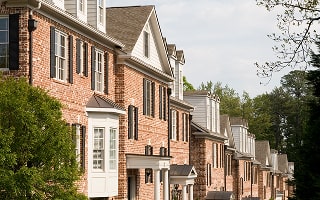
Georgia's diverse economy and geographical landscape makes its real estate market attractive to a wide range of end users, developers, and investors. The metropolitan regions and smaller towns offer varying blends of financial potential, regulatory flexibility, and property-specific appeal.
Regardless of whether you're a first-time buyer or an experienced flipper, it's important to consider factors such as the local economy, neighborhood walkability, rental demand, local development incentives, and historic preservation efforts. Understanding the effects of these factors is an essential tool in helping identify the right location and maximizing returns. The following areas are currently well positioned to yield strong returns for investors based on a mix of appreciation potential, market demand, and local development conditions:
- Atlanta (West Midtown): Industrial conversions, loft-style housing, and proximity to Tech Square have transformed West Midtown into a prime location for modern urban living. Rental yields in Atlanta typically range between 6% and 10% and vary by neighborhood and property type. Multifamily properties often deliver strong returns in this market. Atlanta's growing public transportation network, especially around MARTA stations, has also opened up attractive investment opportunities. Properties near these transit hubs tend to appreciate more quickly than those in other parts of the city.
- Savannah: Savannah stands out as one of Georgia's most attractive real estate markets due to its historic charm, steady rental demand, and strong tourism industry. Economic growth driven by the expanding port adds to Savannah's long-term investment appeal, with experts predicting increased demand for coastal markets. Beyond the city center, neighborhoods such as Ardsley Park, Midtown, and the Starland District provide more affordable options while still delivering solid rental yields.
- Athens (Five Points and Normaltown): Steady rental demand from the University of Georgia, a thriving local arts scene, and consistent population growth create a reliable investment environment. These neighborhoods balance walkability, the appeal of historic homes, and access to downtown Athens, allowing investors to target students, faculty, and creative professionals alike.
- Alpharetta: Affluent demographics, tech-sector jobs, and rising home valuescontribute to Alpharetta's appeal as a premium investment zone. With its bustling downtown, high-ranking schools, and Fortune 500 presence, the area supports consistent demand for both owner-occupied and rental housing.
- Marietta (East Cobb and Downtown): Top-tier schools, suburban charm, and limited inventory continue to push home prices upward in Marietta. East Cobb is especially attractive for families, while downtown Marietta offers walkable redevelopment potential, making the area suitable for both traditional homes and townhome projects.
- Roswell and Inman Park: This area has a unique blend of Southern tradition and modern convenience, thanks to its historic charm, walkable neighborhoods, and restored Victorians and bungalows. Inman Park is known for its artsy appeal, which keeps homes in high demand, while Roswell's family-friendly vibe and green spaces make it ideal for suburban development.
- Cumming (Forsyth County): Rapid population growth, proximity to Lake Lanier, and favorable tax structure make Cumming a standout location for both primary homes and vacation properties. Also, new subdivisions, good schools, and easy access to GA-400 support both steady price growth and developer interest.
- Tybee Island: Affordable coastal properties, less investor competition, and tourism-driven short-term rentals present a unique opportunity for outsized returns. With Savannah just 20 minutes away, Tybee offers an alternative to more saturated beach towns while maintaining strong vacation appeal and limited buildable land.
- Columbus: Columbus offers lower median home prices compared to many other cities in the state, making it an accessible market for new and seasoned investors alike. Its proximity to Fort Benning creates consistent rental demand, with military personnel and their families providing a reliable tenant base. Columbus has also gained national recognition as one of the top cities for short-term rental investment, reflecting its growing appeal in the vacation rental market. Rental yields in Columbus are typically high, especially for properties that cater to the military community. The city's economy is well rounded, with strong contributions from manufacturing, healthcare, and education, supporting job growth and population stability.
- Lawrenceville: Lawrenceville, located in Gwinnett County, is gaining attention as a promising market for real estate investors in Georgia. The city combines suburban appeal with growing economic activity, making it suitable for both long-term and short-term rental strategies. Its steady rental demand is driven by population growth and close proximity to Atlanta, offering investors access to a broad tenant base. The revitalization of Lawrenceville's downtown has brought in new businesses and residents, helping sustain property values and enhance the city's appeal.
With lower property prices than central Atlanta, Lawrenceville offers strong cash flow potential. Investors can often secure favorable cash-on-cash returns, making it an attractive option for those focused on income-generating assets.
What Home Styles, Sizes, and Features Tend to Sell Fastest in the Georgia Market?

Homes in Georgia typically sell at a moderate pace in line with the national median, with the typical days on market estimated at 63 days as of September 2025. However, properties that match common buyer preferences, especially per layout, size, and design, often sell more quickly, particularly in popular suburbs and growing towns.
-
![]() Bedrooms: Homes with 3-4 bedrooms and 2 bathrooms are the most in-demand across much of Georgia. These properties strike the right balance for buyers seeking space and function. In cities like Lawrenceville, Marietta, and Alpharetta, these home types are especially popular with buyers looking for good school districts and community amenities.
Bedrooms: Homes with 3-4 bedrooms and 2 bathrooms are the most in-demand across much of Georgia. These properties strike the right balance for buyers seeking space and function. In cities like Lawrenceville, Marietta, and Alpharetta, these home types are especially popular with buyers looking for good school districts and community amenities.
-
![]() Size and Lot: Properties ranging between 1,500 and 2,500 square feet, typically situated on 0.25- to 0.5-acre lots, tend to sell faster in both suburban and semi-urban areas. This size range offers enough room for families to live comfortably without overwhelming maintenance costs. Suburban areas like Cumming, Peachtree City, and Woodstock often see brisk activity in this size category, especially when outdoor space is usable and well landscaped.
Size and Lot: Properties ranging between 1,500 and 2,500 square feet, typically situated on 0.25- to 0.5-acre lots, tend to sell faster in both suburban and semi-urban areas. This size range offers enough room for families to live comfortably without overwhelming maintenance costs. Suburban areas like Cumming, Peachtree City, and Woodstock often see brisk activity in this size category, especially when outdoor space is usable and well landscaped.
-
![]()
Style: The following architectural styles tend to sell quickly, depending on location and buyer demographics:
- Ranch-style homes: Popular in older suburbs for their single-level layout and potential for remodeling.
- Craftsman bungalows: Favored in historic areas like Decatur and Inman Park for their character and curb appeal.
- Modern farmhouse designs: Sought after in newer developments and transitional suburbs for their blend of traditional charm and contemporary features.
- Updated Victorian cottages: Strong performers in walkable neighborhoods with historic value.
- Cape Cod and Colonial styles: Less common but highly desirable in wealthier suburbs where traditional aesthetics are valued.
- Urban townhomes and condos: Often sell fast in redevelopment zones like West Midtown and near the Atlanta BeltLine, especially among younger professionals.
-
![]()
Modern Upgrades: Homes with updated features are more likely to attract quick offers. Buyers typically respond well to:
- Open-concept kitchens and living spaces that enhance flow and natural light.
- Energy-efficient appliances and systems, which reduce long-term utility costs.
- Fresh, neutral paint and updated flooring that present a clean, move-in-ready appearance.
- Renovated bathrooms with modern fixtures and finishes.
- Good curb appeal, including manicured lawns, fresh exterior paint, and inviting entryways.


What Should Home Sellers Know About Zoning Laws, Permits, and Regulatory Requirements in Georgia?

In Georgia's real estate market, understanding zoning laws and regulatory requirements is essential for home sellers and developers aiming to maximize return on investment (ROI). Zoning determines how a property can be used — whether residential, commercial, or mixed-use — and directly affects resale value, renovation options, and future development potential.
Before listing or developing a property, sellers should verify local zoning classifications and ensure compliance with relevant building codes. In many cases, buyers or their agents request a zoning compliance letter from the local planning department to confirm that the property is free from zoning violations or unauthorized uses. This document is often a key part of due diligence and can influence the speed and success of a sale.
Depending on the location within Georgia, regulatory strictness, permit requirements, and oversight can vary widely.
Jurisdictions with Strict Zoning Laws
- City of Atlanta (Fulton County and DeKalb County): Atlanta enforces detailed zoning overlays, historic preservation restrictions, and density limits in many neighborhoods. Development is closely monitored, especially near the BeltLine and in areas like Buckhead and Midtown.
- Brookhaven (DeKalb County): Known for tightly regulated residential zoning, especially concerning lot sizes, accessory dwelling units (ADUs), and short-term rentals.
- Alpharetta (Fulton County): Implements strict zoning rules around signage, density, and design, especially in its downtown and tech corridors.
Jurisdictions with Less Bureaucratic Zoning Laws
- Paulding County: Generally offers more flexible zoning and a simpler permitting process for residential construction, appealing to investors seeking fewer restrictions.
- Barrow County: Encourages residential development with fewer layers of review, particularly outside city limits.
- Douglas County: Maintains a more development-friendly environment with faster permit approvals for certain housing types.
Jurisdictions Requiring Special Permits via Public Hearing
- Cobb County: Conditional uses such as duplexes, short-term rentals, or home businesses often require a special land use permit and approval from the Zoning Board of Appeals after a public hearing.
- DeKalb County: Many zoning variances or conditional uses, especially near Decatur, must go through a formal hearing and board approval process.
- Gwinnett County: Expanding residential or converting use often requires rezoning and public input, particularly in established neighborhoods.
Jurisdictions Where Certificate of Occupancy (CO) Is Required
- City of Atlanta: A CO is mandatory before any residential or commercial building can be legally occupied. Renovations that alter occupancy classification or major systems also trigger CO reissuance.
- Savannah (Chatham County): Enforces CO requirements for new builds and major renovations, particularly in historic or mixed-use districts.
- Columbus (Muscogee County): Requires a CO for any newly built or substantially remodeled residential structure.
Areas with Historic Commissions Requiring Approval for Changes
- Savannah Historic District: Any alteration to a structure's exterior — including paint color, windows, and roofing — requires approval from the Historic District Board of Review to preserve the area's architectural integrity.
- Inman Park and Grant Park (Atlanta): Located within local historic districts where the Urban Design Commission must approve most visible exterior changes or material alterations.
- Madison (Morgan County): The city's Historic Preservation Ordinance gives its Historic Preservation Commission authority over renovations in the historic core, affecting window types, fencing, and structural changes.
Which Towns or Cities in Georgia Are the Easiest — and Hardest — When It Comes to Navigating Real Estate Regulations?

For home sellers and developers in Georgia, staying compliant with local real estate regulations is crucial for avoiding legal complications and preserving a property's value. Local governments control zoning, permitting, and land-use policies, and the regulatory climate can vary significantly from one jurisdiction to another. Understanding whether an area is development friendly or highly restrictive helps investors plan more effectively and avoid costly delays.
Development-Friendly Areas

- Paulding County: Known for minimal red tape and cooperative planning staff, ideal for residential builders and small-scale developers.
- Barrow County: Offers simpler processes for rezoning and land development, with fewer delays and lower fees.
- Douglas County: Maintains efficient permitting procedures and a development-supportive environment, especially outside incorporated city limits.
- Statesboro (Bulloch County): Encourages residential growth with relatively few barriers, making it attractive for new subdivisions.
- Hinesville (Liberty County): Proximity to Fort Stewart creates strong housing demand, and local policies support fast-track permitting for new construction.
Moderately Regulated Areas

- Marietta (Cobb County): While the city follows a formal review process, developers benefit from clear codes and predictable planning board timelines.
- Savannah (Chatham County): Outside the Historic District, zoning and permitting are moderately regulated, especially for conventional residential builds.
- Newnan (Coweta County): Offers growth opportunities but enforces planning standards and community input for rezoning and high-density projects.
- Athens-Clarke County: Supports smart growth policies, though developers must work within urban service boundaries and long-term land-use plans.
- Woodstock (Cherokee County): The city encourages thoughtful development but requires formal site plans, architectural reviews, and traffic impact assessments.
Highly Restrictive or Bureaucratic Areas

- City of Atlanta: Numerous zoning overlays, historic district rules, and multilayered approvals can slow down even small projects.
- Brookhaven (DeKalb County): Enforces strict short-term rental limits, ADU rules, and zoning codes that require detailed review and community engagement.
- Alpharetta (Fulton County): Development is tightly regulated through design overlays and downtown-specific standards; public hearings are often required.
- Decatur (DeKalb County): High community involvement and preservation priorities make approvals for alterations and new construction time-consuming.
- Madison (Morgan County): The city's Historic Preservation Commission mandates approvals for exterior changes, materials, and even colors in the downtown district, making it among the most tightly regulated small towns.
Regulatory Climate Factors to Watch

Since the regulatory climate in Georgia varies significantly from one jurisdiction to another, sellers, investors, and developers are advised to evaluate the specific conditions and regulations in the area where they intend to invest or flip property. Understanding these regulations can help investors avoid unexpected delays and added costs. The table below helps buyers and developers interested in investing in the Georgia real estate market, highlighting regulatory responsibilities and challenges and where they're commonly found.
| Factor | Impact on Development | Where It's Found |
|---|---|---|
| Zoning Flexibility | Determines how easily a property's use can be changed or expanded | Paulding County, Barrow County, Douglas County, and Hinesville |
| Historic Preservation Laws | Requires approval for exterior changes, limits design flexibility | Savannah Historic District, Inman Park (Atlanta), Grant Park (Atlanta), and Madison |
| Wetlands/Conservation | Reduces buildable land, adds permitting layers and environmental reviews | Coastal Georgia (Savannah, Brunswick), and North Georgia mountains (Ellijay, Blue Ridge) |
| Inclusionary Zoning | Requires developers to include affordable housing units | Brookhaven and the City of Atlanta |
| Building Code Enforcement | Affects project costs and timelines through inspections and compliance | Alpharetta, Decatur, Sandy Springs, and Columbus |
| Local Politics/NIMBYism* | Community resistance can block or delay housing projects | Decatur, Brookhaven, Madison, and parts of North Fulton County (such as Milton) |
*NIMBYism - Not in My Backyard
What Are the Most Effective Flipping and Resale Strategies for Maximizing Profit in Georgia's Housing Market?

Georgia's strong population growth, housing demand, and diverse market conditions across urban and suburban areas makes flipping houses in the state a potentially profitable venture. However, the success of each investment depends on more than just buying low and selling high. It also requires a strategic approach grounded in market trends, sound financial planning, and knowledge of local buyer preferences.
Whether you're flipping homes in bustling Atlanta neighborhoods or revitalizing properties in emerging towns like Watkinsville or Valdosta, understanding the most effective resale strategies is essential. From sourcing distressed properties to securing skilled contractors and using smart financing, each step plays a critical role in determining your return on investment.
Below are some recommended flipping and resale strategies tailored to Georgia's housing market:
-
![]() Buy Distressed or Foreclosure Properties: One of the most reliable ways to secure a profitable flip is by purchasing properties that are distressed, foreclosed, or part of probate sales. These homes often sell below market value and provide room for equity gains after renovation. In Q2 2024, Georgia flippers earned an average gross profit of $55,694 per flip, representing a 21.9% ROI. This performance was particularly strong in distressed markets, such as Griffin and Lithonia.
Buy Distressed or Foreclosure Properties: One of the most reliable ways to secure a profitable flip is by purchasing properties that are distressed, foreclosed, or part of probate sales. These homes often sell below market value and provide room for equity gains after renovation. In Q2 2024, Georgia flippers earned an average gross profit of $55,694 per flip, representing a 21.9% ROI. This performance was particularly strong in distressed markets, such as Griffin and Lithonia.
-
![]() Apply the 70% Rule: Using the 70% Rule helps investors avoid overpaying for a property. The rule limits buyers to spending a maximum of 70% of the property's after-repair value (ARV), once any repair costs have been deducted. This ensures that, after selling expenses and holding costs, there's still room for profit. Georgia real estate experts consistently recommend this rule, especially in competitive but stable neighborhoods like Smyrna or Kirkwood, where ARVs are easier to estimate accurately.
Apply the 70% Rule: Using the 70% Rule helps investors avoid overpaying for a property. The rule limits buyers to spending a maximum of 70% of the property's after-repair value (ARV), once any repair costs have been deducted. This ensures that, after selling expenses and holding costs, there's still room for profit. Georgia real estate experts consistently recommend this rule, especially in competitive but stable neighborhoods like Smyrna or Kirkwood, where ARVs are easier to estimate accurately.
-
![]() Target High-Demand Neighborhoods: Flipping is most successful in areas where homes sell quickly and appreciate steadily. Hot neighborhoods for flips include West End, East Atlanta, Kirkwood, Decatur, Smyrna, and Buckhead, all of which show strong buyer demand and growth potential. Outside the Atlanta metro, cities like Savannah, Augusta, and Athens also perform well for flippers looking for fast resale opportunities.
Target High-Demand Neighborhoods: Flipping is most successful in areas where homes sell quickly and appreciate steadily. Hot neighborhoods for flips include West End, East Atlanta, Kirkwood, Decatur, Smyrna, and Buckhead, all of which show strong buyer demand and growth potential. Outside the Atlanta metro, cities like Savannah, Augusta, and Athens also perform well for flippers looking for fast resale opportunities.
-
![]() Go Beyond Cosmetic Work (Value-Add Flipping): For flipping success, focus on renovations that boost resale potential. The most impactful upgrades are kitchen and bathroom remodels, curb-appeal improvements, and open living spaces. In contrast, projects like finishing a basement or adding highly specialized rooms tend to recoup less investment. Prioritizing cosmetic improvements with broad appeal is key in the Georgia market, where buyers want move-in-ready homes.
Go Beyond Cosmetic Work (Value-Add Flipping): For flipping success, focus on renovations that boost resale potential. The most impactful upgrades are kitchen and bathroom remodels, curb-appeal improvements, and open living spaces. In contrast, projects like finishing a basement or adding highly specialized rooms tend to recoup less investment. Prioritizing cosmetic improvements with broad appeal is key in the Georgia market, where buyers want move-in-ready homes.
-
![]() Renovate with Quality — Don't Cut Corners: A trustworthy renovation team, including licensed contractors, inspectors, appraisers, and real estate agents, can make or break a flip. Real estate professionals in Georgia emphasize the importance of hiring skilled workers to avoid delays and failed inspections, especially in areas like Atlanta or renovation-intensive towns such as Watkinsville.
Renovate with Quality — Don't Cut Corners: A trustworthy renovation team, including licensed contractors, inspectors, appraisers, and real estate agents, can make or break a flip. Real estate professionals in Georgia emphasize the importance of hiring skilled workers to avoid delays and failed inspections, especially in areas like Atlanta or renovation-intensive towns such as Watkinsville.
-
![]() Market Efficiently and Explore (FSBO Options): When selling, maximizing exposure while minimizing costs is vital. Using flat-fee MLS services or exploring For Sale By Owner (FSBO) options can reduce commissions and increase profit margins. Home flippers in Georgia may save approximately 3% in agent commissions by using flat-fee or FSBO listing services, especially in hot areas where homes sell quickly. This approach works particularly well in high-traffic markets like metro Atlanta or Savannah.
Market Efficiently and Explore (FSBO Options): When selling, maximizing exposure while minimizing costs is vital. Using flat-fee MLS services or exploring For Sale By Owner (FSBO) options can reduce commissions and increase profit margins. Home flippers in Georgia may save approximately 3% in agent commissions by using flat-fee or FSBO listing services, especially in hot areas where homes sell quickly. This approach works particularly well in high-traffic markets like metro Atlanta or Savannah.
-
![]() Finance Smartly (Cash, Hard Money, Private Investors): Flippers who use creative financing strategies, like hard money loans, home equity lines of credit (HELOCs), or partnerships with private investors, gain an edge in fast-paced markets. Using cash or specialized financing allows investors to close deals faster and negotiate better prices, which is essential in competitive cities.
Finance Smartly (Cash, Hard Money, Private Investors): Flippers who use creative financing strategies, like hard money loans, home equity lines of credit (HELOCs), or partnerships with private investors, gain an edge in fast-paced markets. Using cash or specialized financing allows investors to close deals faster and negotiate better prices, which is essential in competitive cities.


How Should Sellers Price Their Homes to Attract Buyers While Maximizing Value in Georgia?

Pricing a home correctly is one of the most important decisions a seller will make, especially in Georgia's varied real estate market. For the best possible return, sellers are strongly advised to work with a local real estate agent or licensed appraiser who can evaluate active, pending, and recently sold comparable homes within the last 90 days. This approach ensures that your home is priced competitively based on current market conditions.
Below are some of the most commonly used pricing strategies in Georgia, each suited to different cities, market climates, and buyer demographics:
-
![]() Pricing Just Below Market Thresholds: This strategy involves setting the listing price just under a key round number — for example, $599,900 instead of $600,000. In Georgia's suburban markets, like Lawrenceville, Douglasville, and McDonough, this tactic is highly effective because many buyers use price filters when searching online. By pricing just below those common thresholds, the property appears in more search results, increasing visibility and attracting more buyer traffic, which in turn can lead to faster offers.
Pricing Just Below Market Thresholds: This strategy involves setting the listing price just under a key round number — for example, $599,900 instead of $600,000. In Georgia's suburban markets, like Lawrenceville, Douglasville, and McDonough, this tactic is highly effective because many buyers use price filters when searching online. By pricing just below those common thresholds, the property appears in more search results, increasing visibility and attracting more buyer traffic, which in turn can lead to faster offers.
-
![]() Charm Pricing (Psychological Pricing): Charm pricing relies on the psychological appeal of prices ending in "900" or "950," such as $249,900. This method creates the impression of a better deal, even if the actual difference is minimal. It tends to work especially well in mid-tier and family-focused areas like Peachtree City, Woodstock, and Snellville, where buyers may be more budget-conscious. The slight pricing adjustment can make a listing stand out and feel more approachable, increasing buyer interest.
Charm Pricing (Psychological Pricing): Charm pricing relies on the psychological appeal of prices ending in "900" or "950," such as $249,900. This method creates the impression of a better deal, even if the actual difference is minimal. It tends to work especially well in mid-tier and family-focused areas like Peachtree City, Woodstock, and Snellville, where buyers may be more budget-conscious. The slight pricing adjustment can make a listing stand out and feel more approachable, increasing buyer interest.
-
![]() Pricing to Create a Bidding War: In competitive markets, especially in desirable school districts or areas with limited inventory, pricing a home slightly below its market value can generate multiple offers. This is common in high-demand areas like Alpharetta, East Cobb, and Decatur. By listing at a slightly reduced price, sellers create a sense of urgency and competition among buyers. This often results in bidding wars, with offers quickly rising above the original list price, maximizing the final sale value.
Pricing to Create a Bidding War: In competitive markets, especially in desirable school districts or areas with limited inventory, pricing a home slightly below its market value can generate multiple offers. This is common in high-demand areas like Alpharetta, East Cobb, and Decatur. By listing at a slightly reduced price, sellers create a sense of urgency and competition among buyers. This often results in bidding wars, with offers quickly rising above the original list price, maximizing the final sale value.
-
![]() High-Anchor Pricing (Testing the Waters): With high-anchor pricing, a home is listed at the upper end of its value range to see how the market responds. This approach is typically used in affluent neighborhoods, such as Buckhead, Brookhaven, and Milton, where buyers are accustomed to negotiation. Listing at a premium gives sellers room to negotiate while also signaling confidence in the property's quality. If the market supports the price, the home may sell at or near the asking price. If not, the seller may adjust accordingly without having gone too low initially.
High-Anchor Pricing (Testing the Waters): With high-anchor pricing, a home is listed at the upper end of its value range to see how the market responds. This approach is typically used in affluent neighborhoods, such as Buckhead, Brookhaven, and Milton, where buyers are accustomed to negotiation. Listing at a premium gives sellers room to negotiate while also signaling confidence in the property's quality. If the market supports the price, the home may sell at or near the asking price. If not, the seller may adjust accordingly without having gone too low initially.
-
![]() Price-Per-Square-Foot Benchmarking: This method uses the price per square foot of comparable homes to set the asking price. It's especially useful in planned subdivisions or condo communities like those found in Suwanee, Pooler, and parts of Columbus, where homes are similar in layout and size. Buyers in these areas tend to evaluate value based on this metric, so aligning with neighborhood standards may help a home sell faster and avoid pricing objections.
Price-Per-Square-Foot Benchmarking: This method uses the price per square foot of comparable homes to set the asking price. It's especially useful in planned subdivisions or condo communities like those found in Suwanee, Pooler, and parts of Columbus, where homes are similar in layout and size. Buyers in these areas tend to evaluate value based on this metric, so aligning with neighborhood standards may help a home sell faster and avoid pricing objections.
-
![]() Appraisal-Backed Pricing: In areas where buyers often use FHA or VA loans, such as Augusta, Warner Robins, and communities near Fort Benning, pricing a home near its likely appraised value is essential. Since these loan types require appraisal-based financing approvals, a home that's overpriced and fails to appraise can cause the deal to fall through. By aligning the price with appraised value expectations, sellers reduce the risk of delays or renegotiations, and increase the chance of a smooth closing.
Appraisal-Backed Pricing: In areas where buyers often use FHA or VA loans, such as Augusta, Warner Robins, and communities near Fort Benning, pricing a home near its likely appraised value is essential. Since these loan types require appraisal-based financing approvals, a home that's overpriced and fails to appraise can cause the deal to fall through. By aligning the price with appraised value expectations, sellers reduce the risk of delays or renegotiations, and increase the chance of a smooth closing.
-
![]() Net-to-Seller Pricing: This approach starts with the seller's financial goal and works backward by factoring in transaction costs like agent commissions, taxes, closing fees, and necessary repairs. It's often used in markets like Savannah and Gainesville, where tight profit margins make it essential for sellers to focus on net proceeds rather than the list price alone. This strategy leads to more realistic pricing and helps sellers avoid surprises at the closing table.
Net-to-Seller Pricing: This approach starts with the seller's financial goal and works backward by factoring in transaction costs like agent commissions, taxes, closing fees, and necessary repairs. It's often used in markets like Savannah and Gainesville, where tight profit margins make it essential for sellers to focus on net proceeds rather than the list price alone. This strategy leads to more realistic pricing and helps sellers avoid surprises at the closing table.
-
![]() Urgency Pricing (Motivated Seller Strategy): Urgency pricing is designed to attract immediate attention by listing the property below market value. It's common in situations involving pre-foreclosures, divorces, estate settlements, or job relocations, especially in markets such as Macon, Rome, and Albany. This strategy signals to buyers that the seller is motivated and willing to negotiate, often resulting in a faster sale. While the price may be lower, it may minimize holding costs and avoid prolonged time on market.
Urgency Pricing (Motivated Seller Strategy): Urgency pricing is designed to attract immediate attention by listing the property below market value. It's common in situations involving pre-foreclosures, divorces, estate settlements, or job relocations, especially in markets such as Macon, Rome, and Albany. This strategy signals to buyers that the seller is motivated and willing to negotiate, often resulting in a faster sale. While the price may be lower, it may minimize holding costs and avoid prolonged time on market.


To price a home effectively in Georgia, sellers must align their pricing strategy with the prevailing market conditions and property type. Different real estate climates require different approaches to attract the right buyers and maximize value. The table below provides guidance for Georgia home sellers in choosing the appropriate strategy based on their specific situation:
| Market Condition | Best Strategy |
|---|---|
| Seller's Market | Underpricing to spark a bidding war |
| Buyer's Market | Use charm pricing or a net-to-seller model to remain competitive and realistic |
| Unique, luxury home | Apply high-anchor pricing with value justification and room for negotiation |
| Entry-level home | Use just-below-threshold pricing to capture buyer interest and maximize exposure |
| Urgent sale needed | Employ urgency pricing to generate fast offers and reduce holding time |
| Flipper or investor listing | Use appraisal-backed pricing or price-per-square-foot benchmarking to support resale or financing requirements |
Which Key Economic, Social, and Regulatory Factors Are Driving Current Trends in Georgia's Local Property Markets?

Several factors combine to shape current trends in Georgia's property markets. These factors interact differently across different municipalities in the state, creating varied pockets of demands and supply.
![]() Economic Factors
Economic Factors
 Economic Factors
In recent years, Georgia has experienced stable employment gains and modest wage growth, especially in tech and advanced manufacturing hubs. Still, the state maintains a relatively low cost of living, making it attractive to both in-state residents and out-of-state migrants looking for affordability. Even with home prices rising, the state remains well below national affordability thresholds.
Housing inventory remains tight across the state, with new construction concentrated in high-growth areas like Central Georgia. With new construction lagging behind demand overall, the market continues to experience ongoing price appreciation.
![]() Demographic and Social Factors
Demographic and Social Factors
 Demographic and Social Factors
Georgia is projected to gain over one million residents by 2035, creating long-term housing pressure, especially in areas with expanding infrastructure and job bases.
Migration trends show continued inbound movement from other states, with middle-income families and retirees fueling demand in places like Athens, Warner Robins, and Augusta. Younger professionals are gravitating toward urban neighborhoods with transit access and amenities, driving demand for condos and townhomes in Atlanta and Savannah.
Culturally, Georgia's housing preferences are split. Older buyers seek quiet suburban or small-town homes, while millennials and Gen Z buyers are increasingly attracted to mixed-use developments and walkable communities, reflecting national lifestyle shifts.
![]() Regulatory and Legal Framework
Regulatory and Legal Framework
 Regulatory and Legal Framework
Local zoning laws and land-use policies significantly shape development trends in Georgia. In cities like Atlanta and Brookhaven, strict zoning overlays and historic preservation rules have slowed new construction and limited the addition of ADUs. Brookhaven, for instance, enforces caps on short-term rentals and restrictions on lot coverage and unit types.
Conversely, jurisdictions such as Paulding, Barrow, and Douglas counties are more flexible, offering a smoother permitting process and encouraging new housing construction. In historic districts like Savannah and Madison, approval from local preservation commissions is required before altering exteriors or materials, which may limit renovation options and increase holding times.
![]() Taxation and Fiscal Policy
Taxation and Fiscal Policy
 Taxation and Fiscal Policy
Georgia does not impose any rent control, and its property taxes are moderate in comparison to other states. More recently, fiscal incentives are being used to address housing shortages in rural areas. Governor Brian Kemp's administration awarded $6.5 million in grants to support workforce housing in towns like Hinesville, Waynesboro, and Moultrie, as part of the state's broader Rural Workforce Housing Initiative.
Although Georgia has no capital gains tax exemptions specific to housing, its competitive corporate tax rates and development grants continue to attract developers and investors to both urban and nonurban areas.
![]() Housing Policy and Government Programs
Housing Policy and Government Programs
The state and local governments have launched several initiatives to support affordable and workforce housing. Through public-private partnerships and land-use incentives, cities like Atlanta are addressing housing shortages. The city recently pledged to deliver over 10,000 affordable housing units on public land through the Urban Development Corporation, which works in collaboration with nonprofit developers.
Outside the metro, the OneGeorgia Authority and Georgia Housing and Finance Authority provide funding for site development, infrastructure, and builder incentives, particularly in regions experiencing housing underproduction.
![]() Infrastructure and Development Trends
Infrastructure and Development Trends
 Infrastructure and Development Trends
Major mixed-use and transit-oriented developments are redefining property values in Georgia's largest cities. Centennial Yards, a $5 billion redevelopment project in Downtown Atlanta, proposes to add residential units, hotels, office towers, and entertainment venues, anchored by major tenants like Live Nation.
Other infrastructure investments include MARTA rail expansions and state highway improvements, which are expanding access to outer suburbs and enabling new residential growth.
![]() Market Sentiment and Investor Behavior
Market Sentiment and Investor Behavior
 Market Sentiment and Investor Behavior
Despite cooling from its pandemic peak, investor interest in Georgia remains strong. Urban hubs and military towns are still hotbeds for single-family rental and flipping activity, while suburban markets are seeing increased demand from institutional investors. However, public concern over corporate bulk-buying of single-family homes has prompted the Georgia Senate to begin hearings on limiting large investor activity, especially in entry-level housing markets.
Georgia's housing market remains a dynamic environment for real estate investment, development, and resale. The state's appeal lies in its economic diversity, strong population growth, and favorable geographic and regulatory variations across counties, cities, and suburban areas.
Georgia's real estate market offers a wide range of options for different investor profiles. Buyers focused on rental income may find stability near military bases around Columbus, while flippers and developers looking for rapid growth and cash flow opportunities may benefit from emerging areas with flexible zoning and development support, such as Paulding or Douglas County. Meanwhile, high-income markets such as Buckhead or Milton reward strategic pricing and luxury-targeted renovations.
As with any real estate investment, understanding the impact of local zoning laws, infrastructure developments, demographic shifts, and market sentiment is critical. From adjusting pricing strategies to match current market conditions, to leveraging public-private housing initiatives or navigating historic preservation rules, success in Georgia's property market requires a data-driven and location-aware approach.
Table of Contents
- Georgia Home Selling
- Which Areas in Georgia Offer the Best Return on Investment and Are Easiest for Residential
- What Home Styles, Sizes, and Features Tend to Sell Fastest in the Georgia Market?
- What Should Home Sellers Know About Zoning Laws, Permits, and Regulatory Requirements in Georgia?
- Which Towns or Cities in Georgia Are the Easiest â and Hardest â When It Comes to Navigating Real Estate Regulations?
- What Are the Most Effective Flipping and Resale Strategies for Maximizing Profit in Georgia's Housing Market?
- How Should Sellers Price Their Homes to Attract Buyers While Maximizing Value in Georgia?
- Which Key Economic, Social, and Regulatory Factors Are Driving Current Trends in Georgia's Local Property Markets?